Activity Workshop · Printables
Sleepover Bingo
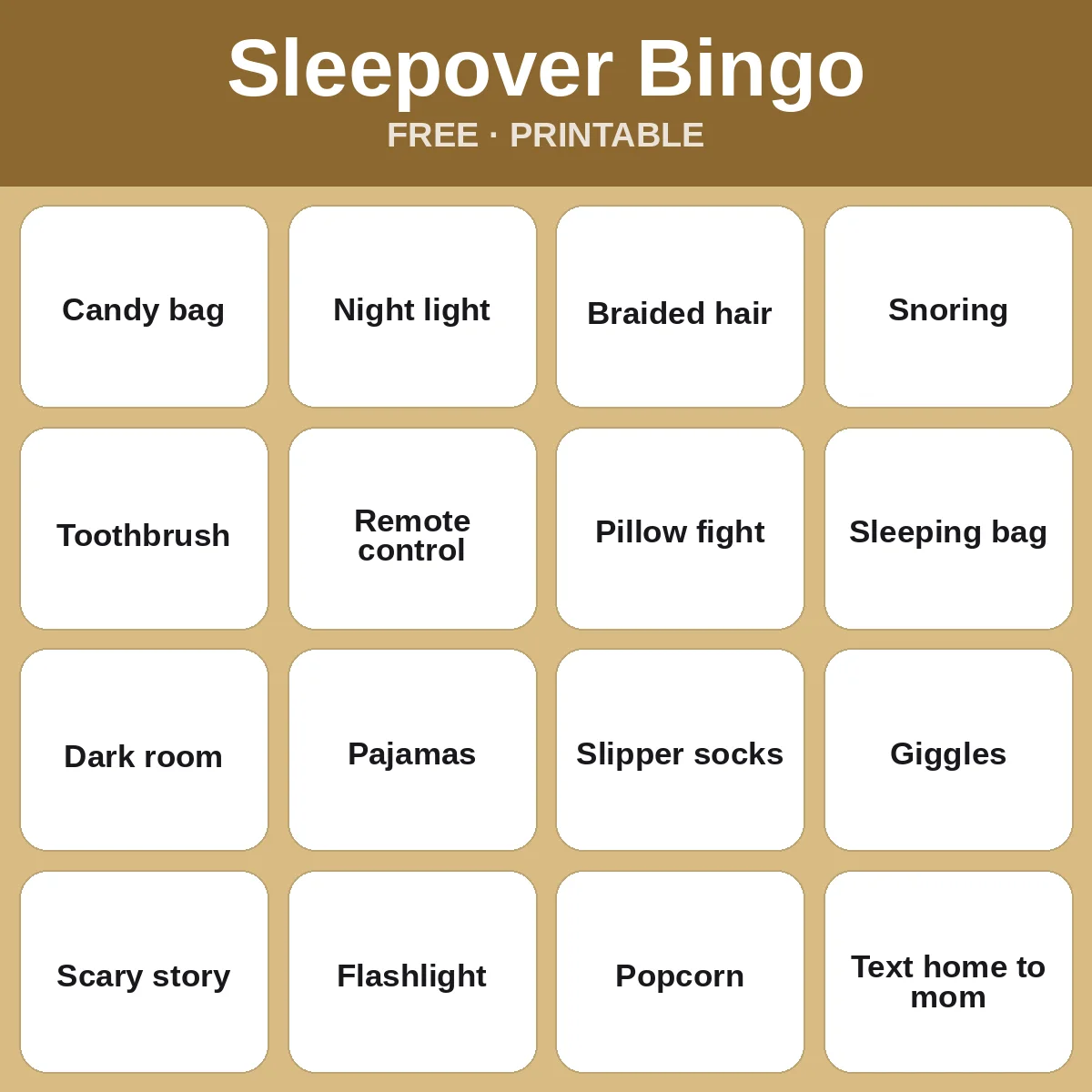
A sleepover is one of the nights kids look forward to most all week — and one of the nights that can spiral into chaos fastest once the pillow fight starts and the scary story gets going. This bingo card gives kids something concrete to watch for as the evening unfolds: a sleeping bag rolled out, a flashlight under the covers, popcorn in a bowl, giggles that won't stop. They cross squares off as things actually happen, instead of you having to invent a new activity every half hour to keep the room from turning upside down. Sleepover bingo is a well-loved tradition in the US and Australia, where it shows up at birthday sleepovers, school holidays, and regular Friday-night hangouts alike. It travels well anywhere kids camp out on a living room floor with cereal waiting for the morning after. Print one card per child, hand out markers or a sheet of stickers, and let the night do the rest.
Download free
Pick an age, download the A4 PDF with 3 bingo boards and a call list, and print. No sign-up.
Pick an age — download PDF
Ages 4–6: picture boardsAges 7–9: pictures and wordsAges 10–12: pictures and words

About this sheet
Sleepover bingo works because it doesn't compete with the sleepover — it runs alongside it. Kids aren't stopping what they're doing to play a separate game; they're just marking off the flashlight, the snacks, and the scary story as those things happen anyway. That's what makes it hold attention for hours instead of the usual twenty minutes.
It's especially useful for the stretch after dinner and before lights-out, when energy is high and structure is low. A card gives kids a reason to notice and narrate what's happening — "pillow fight, cross it off!" — which naturally slows down the wilder moments without an adult having to step in and referee.
Because the squares are ordinary sleepover moments rather than anything holiday-specific, the card works year-round: birthday sleepovers, summer break, a random Friday night, a grandparent's house. Print a stack in advance and there's always one ready when a sleepover comes together on short notice.
For groups of kids, print several cards so everyone has their own — the shared moments (the scary story, the popcorn, the giggling) still bring the room together even when each child is marking a different sheet.
What you get
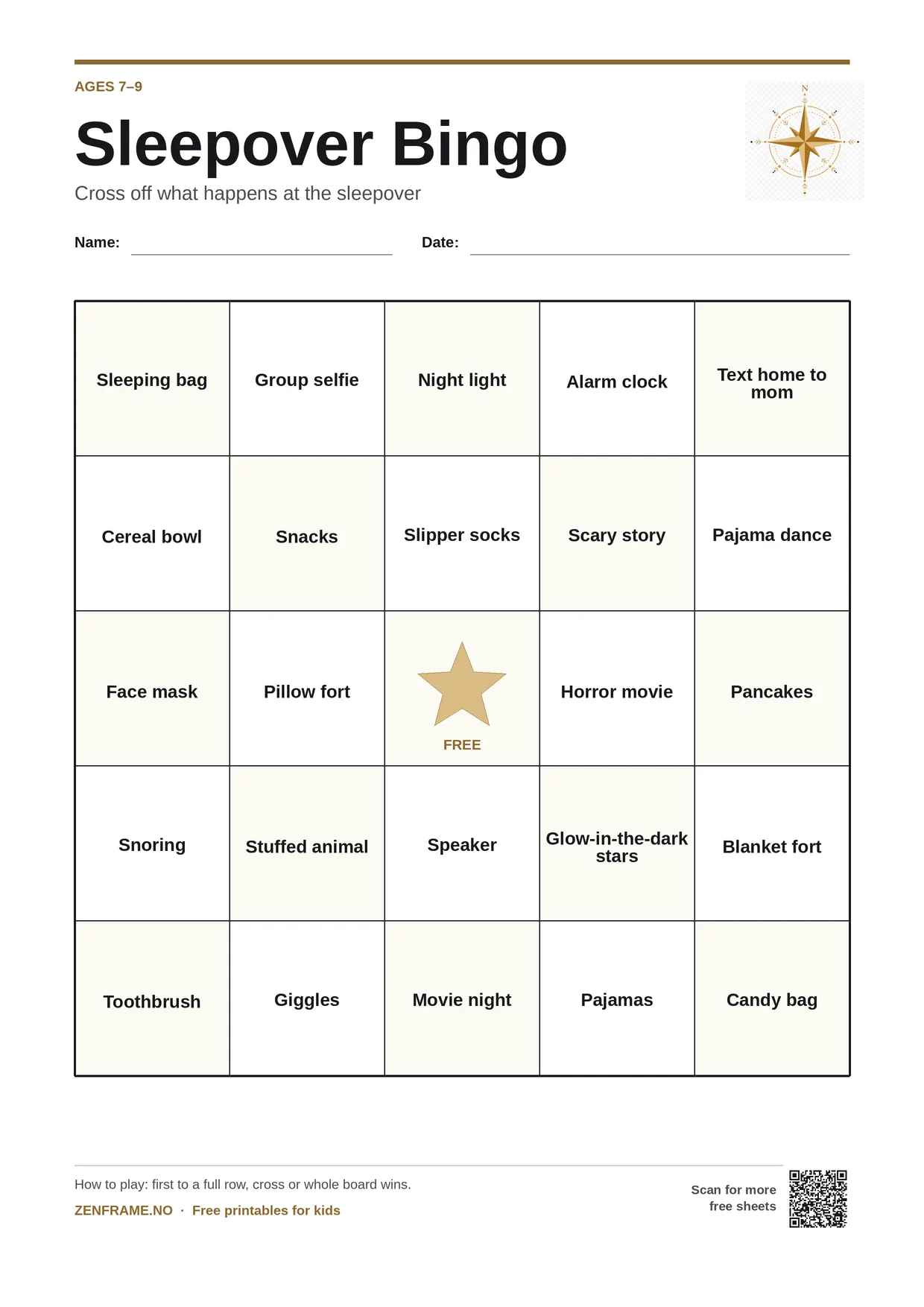
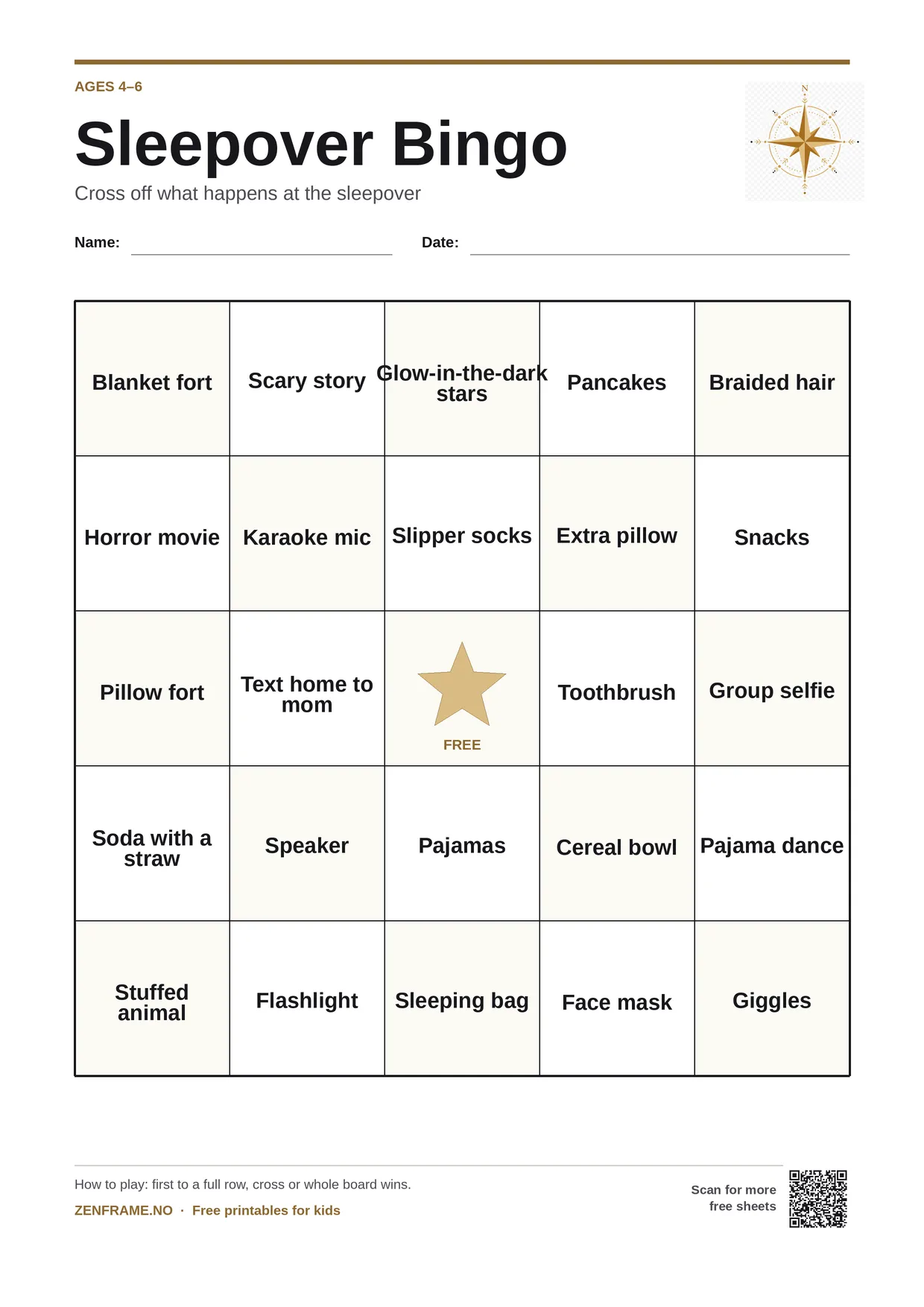
- Three different 5×5 sleepover bingo boards plus a call list in each PDF, ready to print at home in minutes
- Up to 34 real sleepover moments, from sleeping bags to midnight giggles
- A clean grid that prints well on any home printer, no cutting required
- A ready-made way to keep a room full of kids occupied without new games every hour
How to use it
- Print one card per child. Use plain paper or cardstock — either works fine, and cardstock holds up better if kids are pressing hard with markers.
- Hand out a marker, crayon, or stickers. Anything that makes a clear mark works. Stickers are less messy if the kids are already in pajamas.
- Cross off squares as the night happens. No need to force it — let the pillow fight, the scary story, and the popcorn happen naturally, and mark them off as they do.
- Call it at a full row, or just fill the card. Some groups play to the first full row; others treat it as a keepsake of everything that happened and fill the whole thing before bed.
More versions of this sheet
Frequently asked questions
- What age is sleepover bingo best for?
- There are versions for ages 4–6, 7–9 and 10–12. The 4–6 boards are all pictures, so even kids who can't read yet can mark the squares themselves, and the older versions add more moments for kids who still think a sleeping bag and a scary story are an event worth tracking.
- How many kids can play at the same time?
- Any number. Print one card per child so everyone gets to mark their own progress; the shared moments like the pillow fight or the scary story still connect the group even with separate sheets.
- Do the kids need special markers or stickers?
- No — a regular marker, crayon, or a sheet of stickers all work fine. Stickers tend to be the least messy option once everyone is already changed into pajamas.
- Is this only for birthday sleepovers?
- Not at all. The squares are ordinary sleepover moments rather than anything tied to a birthday or holiday, so the same card works for a random Friday night, a school break, or a grandparent's house.
- What happens when a child fills the whole card?
- Some families stop at the first completed row and call it a win; others let kids keep going and treat the finished card as a keepsake of everything that happened that night.