Activity Workshop · Printables
Backyard Bird Bingo for Kids
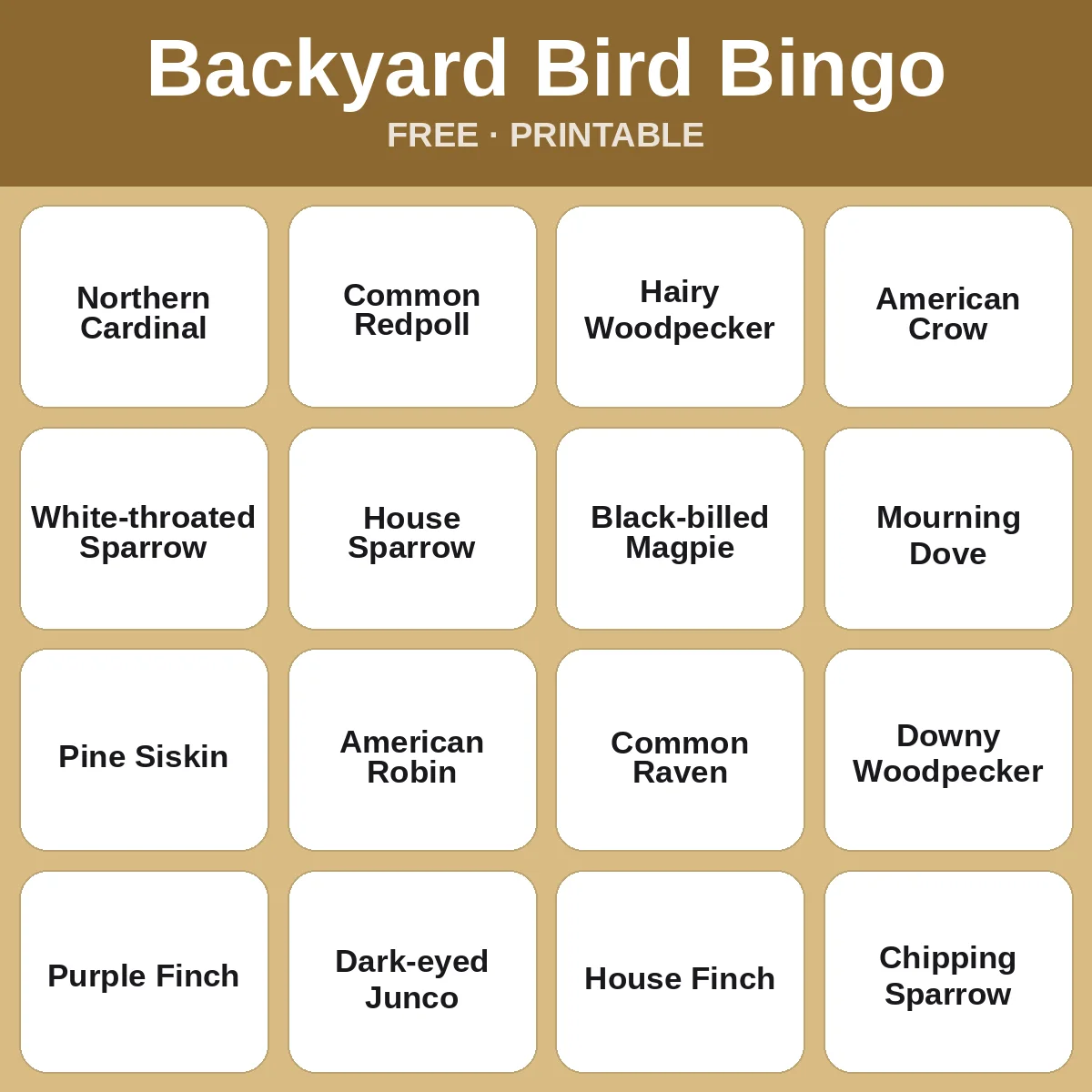
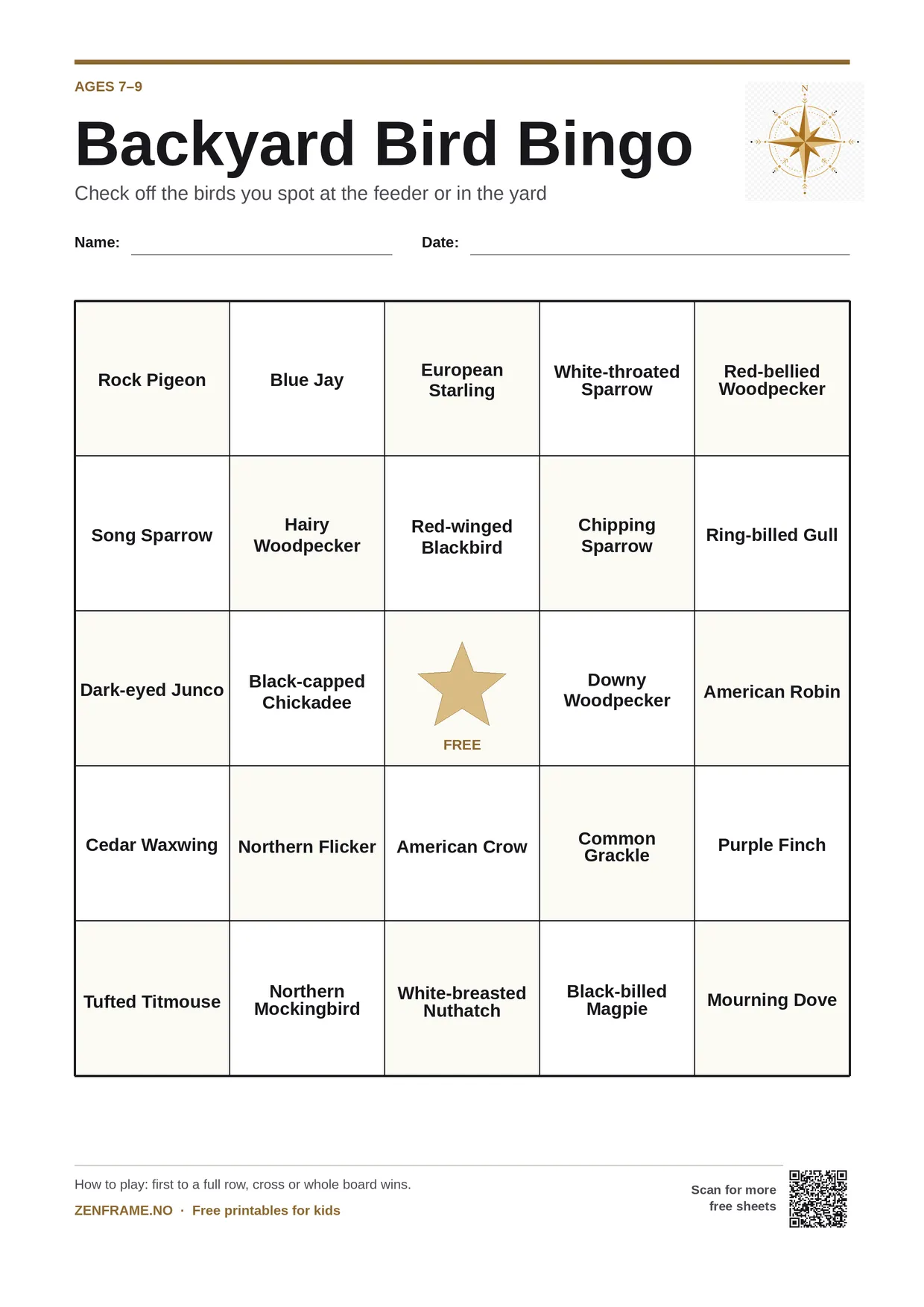
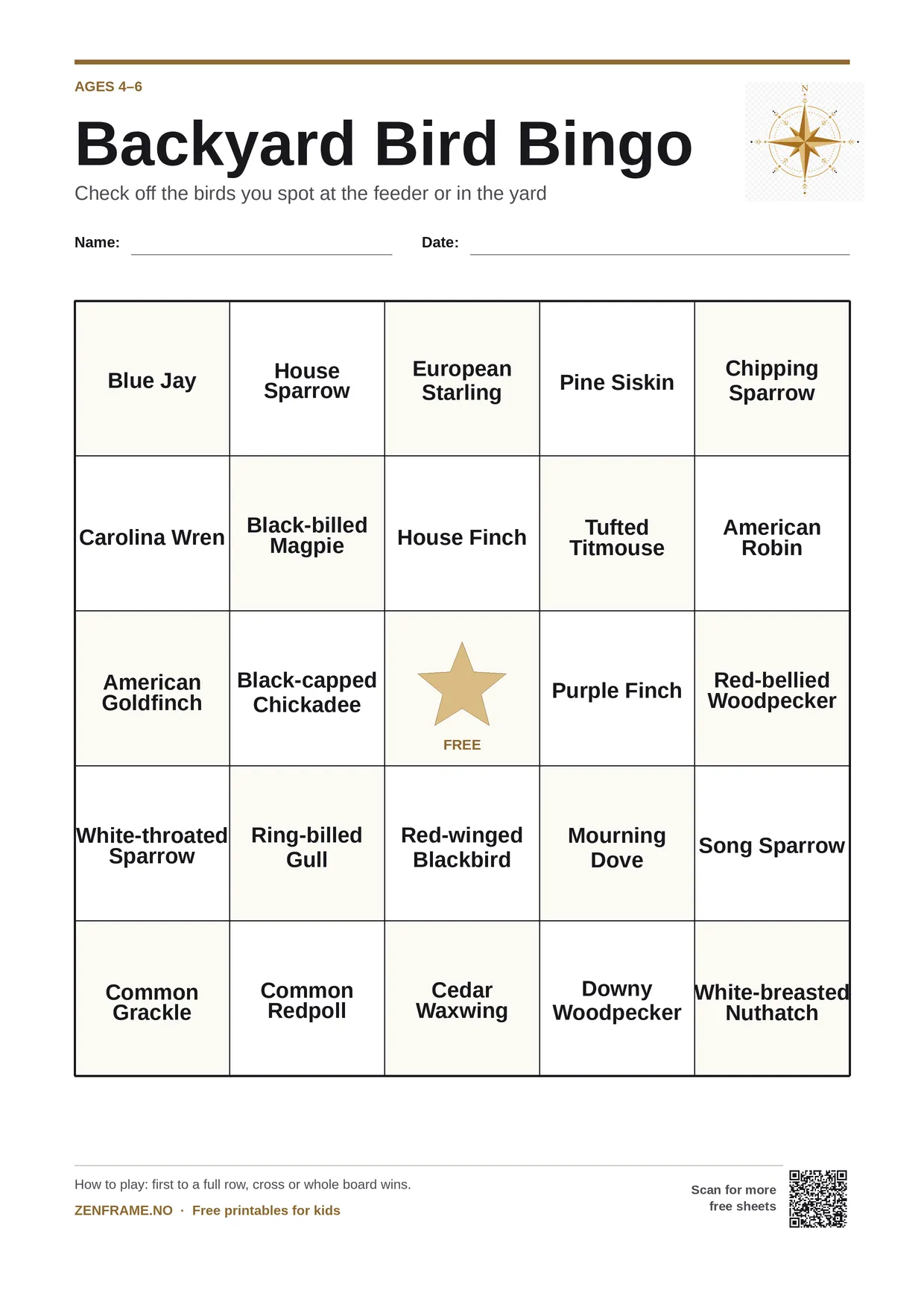
Backyard Bird Bingo for Kids is a free bingo sheet featuring the birds most families actually see at the feeder or in the yard — chickadees, blue jays, cardinals, robins, and more. Download the sheet as a PDF, print it at home, and tape it up by the kitchen window or next to the feeder, so the kids have something concrete to look for the next time a bird lands outside. Winter is when this works best as a quiet everyday moment: fill the feeder, set the sheet on the windowsill, and let the kids check off birds while they wait for the next visitor. It works just as well in the backyard come summer, and pairs naturally with nature bingo on a walk or a nature quiz at the table on a rainy day.
Download free
Pick an age, download the A4 PDF with answers, and print. No sign-up.
Pick an age — download PDF

About this sheet
Most of the birds on this sheet are visitors you already have without trying — black-capped chickadees and tufted titmice at the feeder, blue jays and crows in the trees, mourning doves on the wire. A few, like the pine siskin or the common redpoll, only show up in bigger numbers during a cold snap, which makes them a nice surprise for sharp-eyed kids.
A sunflower seed or suet feeder near the window pulls in the widest variety with the least effort, and a ground feeder or scattered seed brings in juncos and sparrows that stay low. In summer, the same sheet works just as well without a feeder at all — most of these birds are just as common in the yard, the park, or along the sidewalk.
Keeping the sheet out for a few days rather than rushing it in one sitting tends to work better, since some birds are daily regulars and others only pass through once a week. It's an easy way to fill ten quiet minutes before school or after dinner, with no screen involved.
Once the backyard birds are checked off, nature bingo takes the same idea outdoors for a walk, and the nature quiz is a good follow-up at the table for a rainy afternoon.
What you get
- One printable bingo sheet with 34 common backyard and urban birds
- Ready to print as a PDF at home, no login or app required
- A calm, screen-free activity for the window, the yard, or a car trip
- Pairs with our nature bingo and nature quiz printables
How to use it
- Print the sheet. Download the PDF and print it at home in black and white or color — one sheet is enough for one player.
- Pick a spot. Tape or prop the sheet by a window with a feeder, or bring it along on a walk in the yard or the park.
- Check off birds. Every time someone spots one of the birds on the list, mark it off — first to fill a row, or the whole card, wins.
- Keep it going. Refill the feeder and leave the sheet out for a few days — most families need more than one sitting to spot them all.
More versions of this sheet
Frequently asked questions
- What ages is backyard bird bingo good for?
- The sheet works well from about age 4 and up. Younger kids can match colors and shapes with an adult's help, while early readers can match the printed names to the birds themselves once they get the hang of it.
- Do I need a bird feeder to play?
- No. A feeder helps bring in more birds close to the window, especially in winter, but plenty of the birds on the sheet — robins, jays, sparrows, doves — are just as easy to spot in a yard, a park, or along a street with a few trees.
- How long does it usually take to fill the whole card?
- It varies by yard and season, but most families spot a good chunk of the common birds within a few days if the sheet stays out by a window, and the rarer winter visitors can take a couple of weeks to show up.
- Is this the same as your nature bingo printable?
- No, nature bingo covers a broader mix of things to spot on a walk — plants, bugs, and animals as well as birds — while this sheet focuses only on the birds most families see at home, so the two work well side by side.
- Can I print this in black and white?
- Yes, the PDF is designed to print cleanly in black and white as well as color, so it works fine on a home printer without color ink, and the bird names stay easy to read either way.