Activity Workshop · Printables
Clothes Bingo for Kids
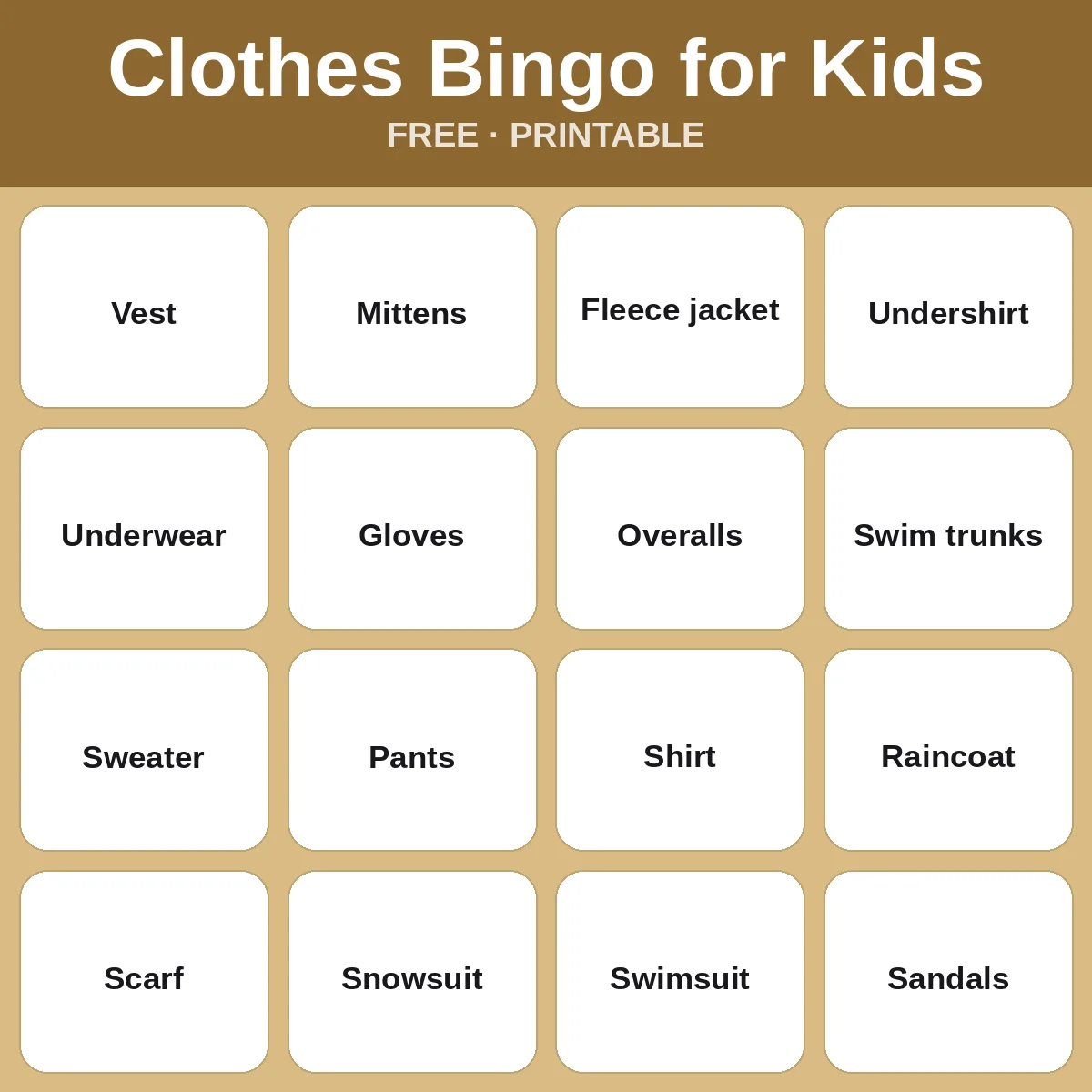
Clothes bingo is a simple way to practice clothing words while children wait their turn, get dressed in the cloakroom, or sit at the table on a quiet afternoon. Each board has nine squares showing everyday clothing items — sweater, sock, mittens, hat — and children recognize the very things they're wearing right now. The game suits preschool-age children in daycare and after-school care, and works just as well at home before heading out the door. Print as many boards as you need, hand them out in the entryway, and let the shout of "bingo!" come from whoever lines up three happy clothing items first.
Download free
Pick an age, download the A4 PDF with answers, and print. No sign-up.
Pick an age — download PDF

About this sheet
Clothes bingo works because it turns something children already do every day — getting dressed — into a moment of recognition and small triumph. A child who spots "mittens" on the card and then looks down at their own hands on a cold morning is doing real vocabulary work without ever feeling like it's a lesson.
The nine squares stay deliberately ordinary: sweater, sock, boots, hat. Nothing exotic, nothing that needs explaining. That's the point — a preschooler should be able to look around the cloakroom, the laundry pile, or their own outfit and find a match within seconds.
Print several boards for a group setting and no two children need to compare notes to both win; each board draws from the same pool of items in a different arrangement, so the game stays fair and fresh across many rounds.
Keep a stack by the entryway or in the classroom coat area. It holds up to daily reuse — no batteries, no app, no screen time, just paper, a marker, and the small chaos of getting dressed.
What you get
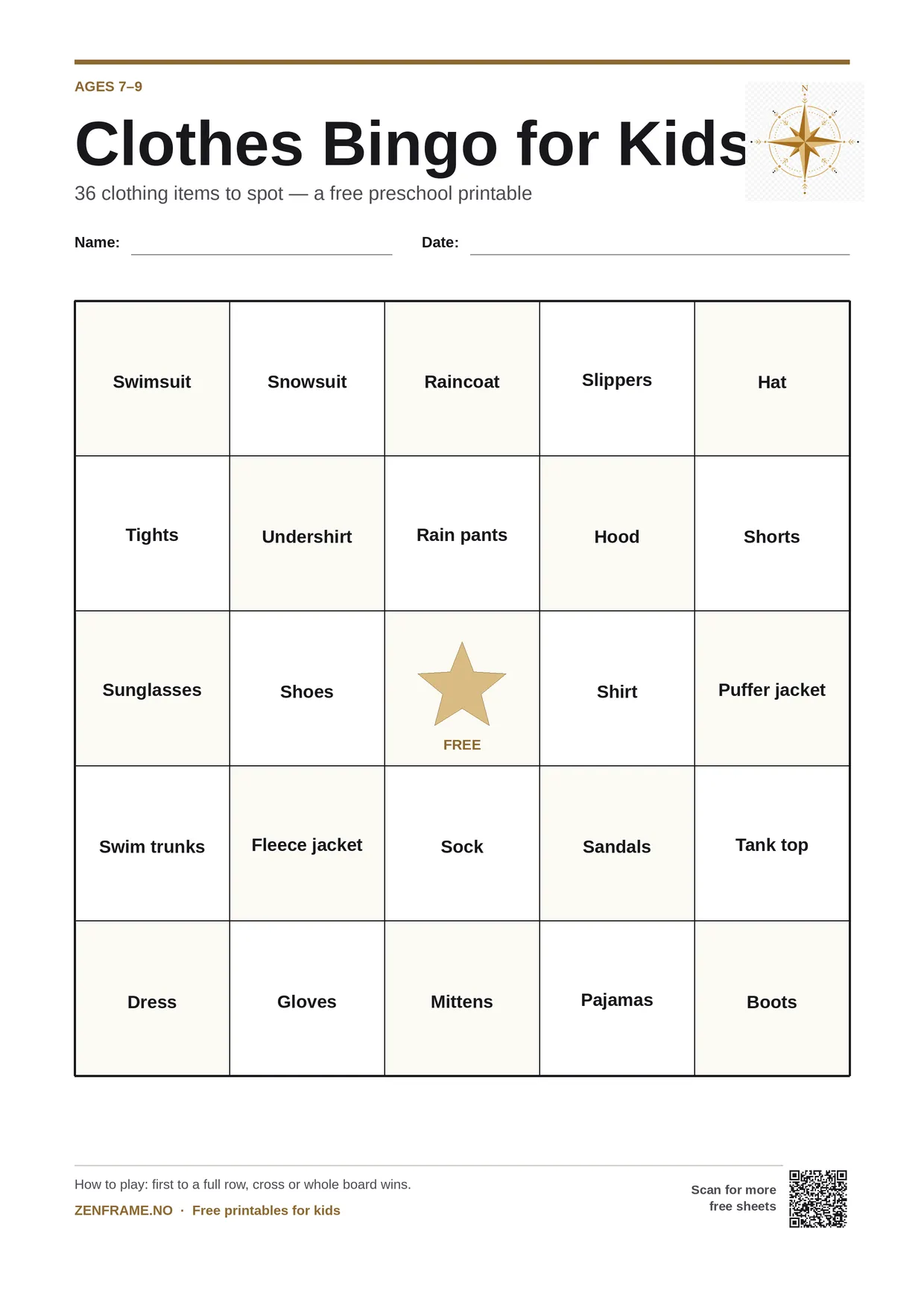
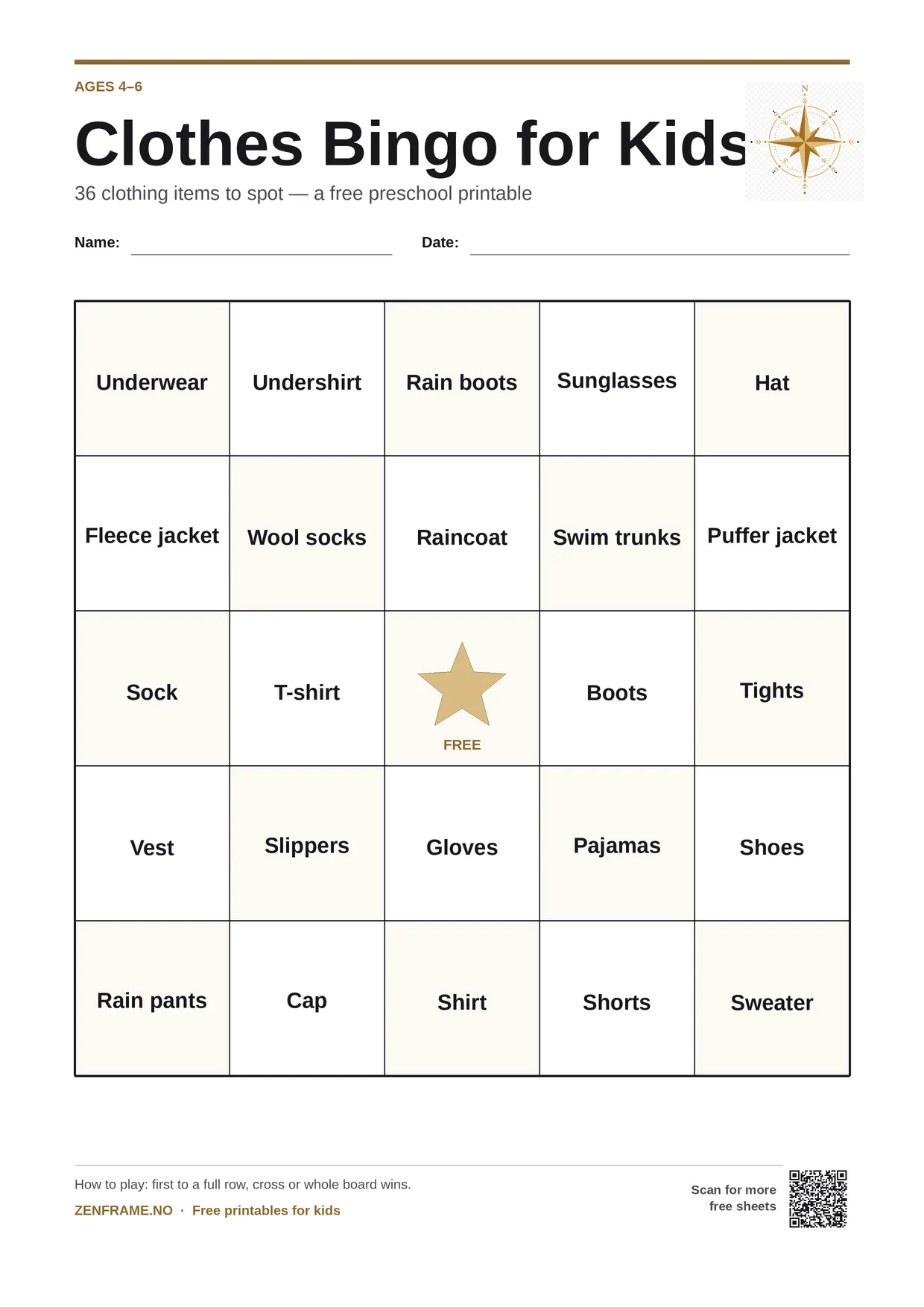
- Printable clothes bingo boards with 36 everyday clothing items across varied nine-square layouts
- Simple, clear illustrations that preschoolers can recognize without adult help
- A ready-to-use activity for cloakrooms, waiting rooms, or quiet time at home
- PDF format sized for standard printer paper, no login required
How to use it
- Print the boards. Print one bingo board per child, or one per pair, straight from the PDF. Regular printer paper works fine; laminate first if you want the boards to survive many rounds.
- Hand out markers. Give each child a crayon, a sticker, or a few small tokens like buttons or coins to place on squares as they're claimed.
- Spot the clothing. Look around the room, the coat rack, or each other's outfits and call out a clothing item whenever it matches a square on the board.
- Call bingo. The first child to mark three squares in a row — across, down, or diagonally — calls out "bingo!" and wins that round.
More versions of this sheet
Frequently asked questions
- What age is clothes bingo printable good for?
- It's built for preschool-age children, roughly three to six years old, who are learning the names of everyday clothing items and starting to recognize written words alongside pictures. The nine-square board keeps rounds short enough for a young child's attention span while still giving a real sense of progress toward a win.
- How many bingo boards should I print for a classroom?
- Print one board per child, or one per small group if you want partners to work together and talk through each item. Each board pulls from the same set of clothing words in a different layout, so a room full of children can play at once without any two boards matching square for square.
- Can this be used at home instead of in a classroom?
- Yes, it works well at home as a calm activity before or after getting dressed, during a rainy afternoon, or as a quiet distraction while waiting for an appointment. A single printed board and a marker or a handful of buttons as tokens is all you need to start a round.
- Do I need to laminate the bingo cards?
- Laminating is optional but useful if you plan to reuse the same boards many times, since it lets you wipe off marker or crayon between rounds instead of printing a fresh copy every time. A plain paper printout works just as well for a single session or a one-off activity.
- What do children mark on the board when they spot an item?
- Any small marker works — a crayon, a sticker, a dry-erase pen over a laminated sheet, or even a button or coin placed on the square. The goal is just a clear, low-effort way to claim a square once the matching clothing item has been spotted or named.