Activity Workshop · Printables
Flowers Bingo for Kids: Spot Roses, Tulips and Sunflowers on Your Next Walk
Spring and summer fill up fast with colour - dandelions in the lawn, bluebells along the path, roses climbing a garden fence. For young children, flowers are first and foremost something to see, count, and recognise, long before they can put a name to them. Flowers bingo turns an ordinary walk to the park or nursery into a small treasure hunt: look for a tulip, a sunflower, a daisy - and mark it off the moment you find it. This is a free printable made for families, preschools, and after-school groups. Print it out, bring it along on a walk around the neighbourhood or into the garden, and let children search for the flowers on their own or together with an adult. The sheet works just as well on a sunny afternoon at home as it does on an organised spring outing with a preschool group - and it pairs naturally with our insect bingo sheet for families who want to turn one walk into a full afternoon of nature-spotting.
Download free
Pick an age, download the A4 PDF with answers, and print. No sign-up.
Pick an age — download PDF

About this sheet
Flower bingo works best from early spring through late summer, whenever front gardens, verges, and parks start filling in. Keep a printed sheet by the door and grab one on the way to nursery, the shops, or a Sunday walk - the best sightings often happen on ordinary errands, not special outings.
Adjust the game to the child. Younger children can point and match by colour or shape without knowing a single name yet; older children can read the word, say it out loud, and look for the small details - petal count, leaf shape, whether it grows on a bush or a stem. Treat it as a shared hunt rather than a race, and let slower, careful looking win over speed.
Real flowers vary with region, season, and what a particular garden happens to be growing, so use the sheet as a prompt rather than a strict checklist - a similar-looking bloom nearby is still worth marking and talking about. The goal is noticing colour, shape, and smell up close, not perfect botanical accuracy.
Flower bingo pairs naturally with our insect bingo sheet: flowers draw bees, butterflies, and beetles, so a single walk can easily become two rounds of spotting back to back. It is an easy way to stretch a short walk into a longer, richer outing for grandparents, childminders, or a full family afternoon outdoors.
What you get
- A free printable flowers bingo sheet, ready to print at home or at preschool
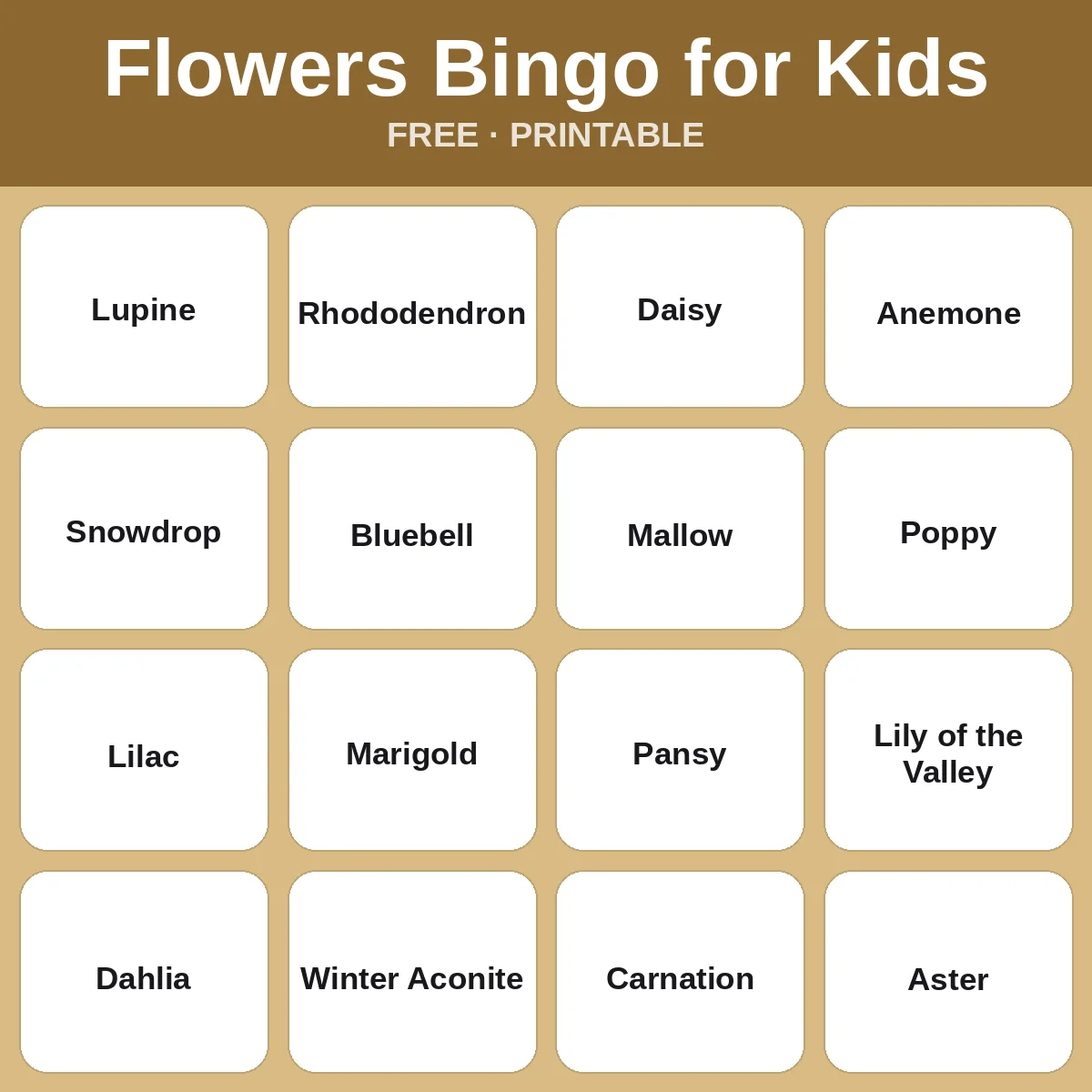
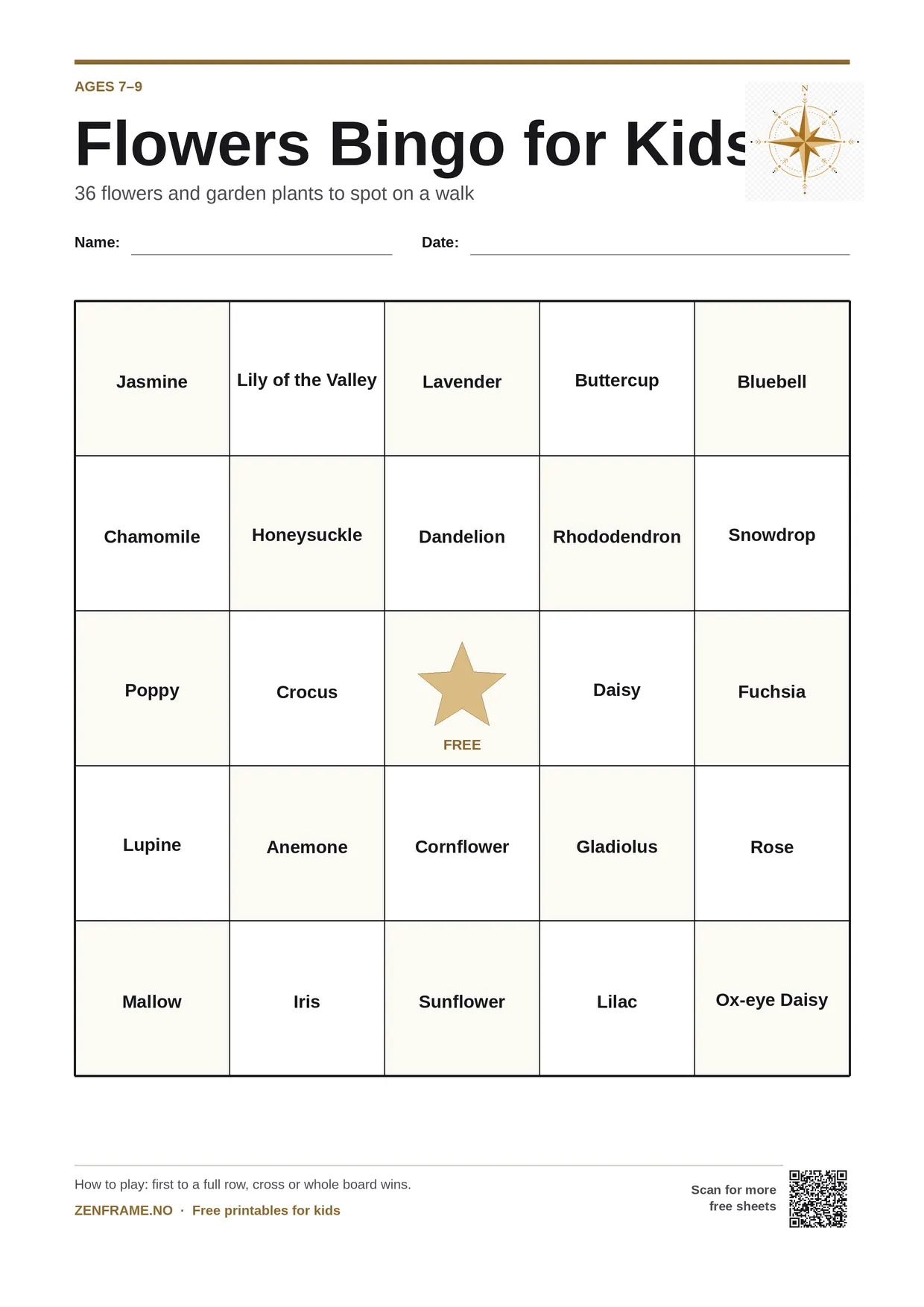
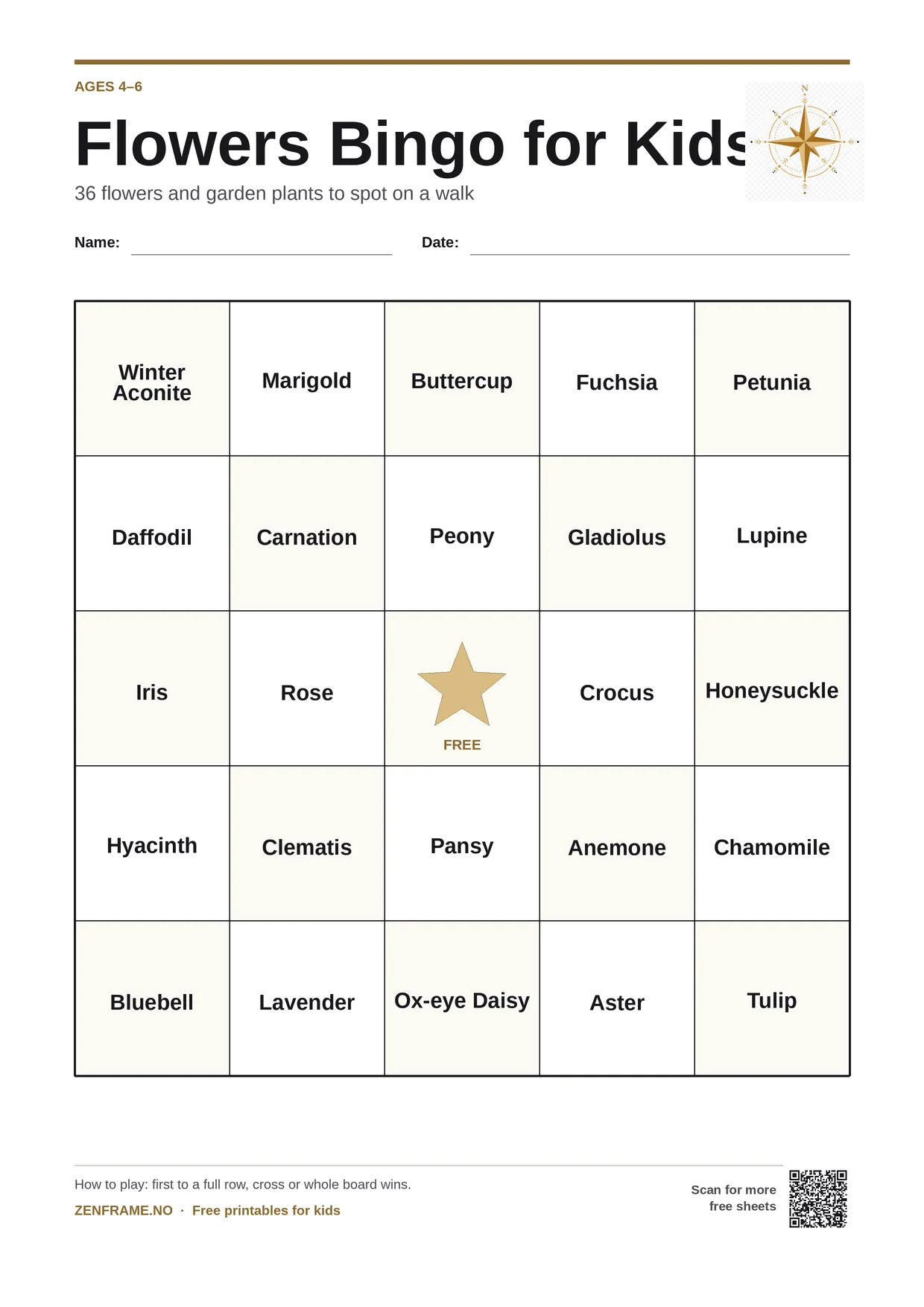
- 36 flowers and garden plants illustrated and named in clear English
- A format that works for one child alone or a whole group side by side
- A natural pairing with the insect bingo printable for a longer nature walk
How to use it
- Print the sheet. Download and print one bingo card per child on regular paper, or laminate a copy for repeated use with a wipe-off marker through the season.
- Head outside together. Take the sheet on a walk through the garden, a park, or the neighbourhood - front gardens and verges in spring and summer are usually full of easy sightings.
- Mark off each flower. Cross off or circle a flower as soon as it is spotted, saying the name out loud together so younger children pick it up naturally.
- Pair it with insect bingo. Once the flower hunt is done, bring out the matching insect bingo sheet for a second round - flowers and the insects around them make one full nature walk.
More versions of this sheet
Frequently asked questions
- What age is flowers bingo suitable for?
- It works from about age three up through early primary school. Younger children can play by matching colour and shape alone, while older children can read the flower names and look for finer details like petal count or leaf shape, so one sheet covers a wide age range at once.
- Do we need to spot every flower to finish the game?
- No - there is no obligation to complete the whole sheet in one outing. Some families play a full line like classic bingo, others simply mark off whatever they find during a single walk and pick up again next time, which keeps the pressure low and the fun high.
- Can this be used in a preschool or kindergarten group?
- Yes, it was designed with exactly that setting in mind. Print one sheet per child or per pair, take the group into the garden or a nearby park, and let children compare notes on what they found - it works well as a short outdoor activity between other lessons.
- What if we cannot find a flower that is on the list?
- Treat the sheet as a guide rather than a strict checklist, since real gardens vary by region and season. A similar-looking bloom nearby is still worth pointing out and talking about, and missing a flower or two does not stop the rest of the game from being enjoyable.
- Is there a matching activity for after the flower hunt?
- Yes - our insect bingo printable uses the same format and pairs naturally with this one, since flowers attract bees, butterflies, and beetles. Many families print both sheets and do two rounds of spotting on the same walk for a longer nature-focused outing.
- How should we print the sheet at home?
- The printable is designed for a standard home printer on A4 or letter paper in black and white or colour. Print one copy per child, or laminate a copy so it can be reused with a wipe-off marker across many walks through the season.