Activity Workshop · Printables
Musical Instruments Bingo for Kids
Musical instruments bingo is a quiet, low-effort activity that works almost anywhere — in the back seat on a long drive, at the kitchen table on a rainy afternoon, or as a calm-down game between recess and homework. Kids already recognize guitar, drums, and violin from music class or a sibling's lesson, and the bingo card gets the game going without any adult needing to prep more than hitting print. This version has seven familiar instruments repeating on every card, plus a bigger word bank you can swap in if you're playing several rounds back to back. Print it, cut out the talking cards, and use buttons, coins, or dried beans from the kitchen drawer as markers — nothing here needs a special trip to the shop.
Download free
Pick an age, download the A4 PDF with answers, and print. No sign-up.
Pick an age — download PDF

About this sheet
Musical instruments bingo earns its place in the car-ride and waiting-room rotation because it asks so little of the adult running it. There's no setup beyond printing, no pieces to lose track of beyond a handful of markers, and the rules explain themselves the first time a child plays.
The core seven — guitar, drums, flute, violin, piano, trumpet, tambourine — are the instruments most kids meet first, whether through a school music program, a sibling's lessons, or a marching band passing by. Recognizing them by sight or by name builds a small, satisfying bit of musical literacy without turning into a lesson.
Because every card repeats the same seven instruments, siblings of different ages can play the same round together — younger kids matching pictures, older ones calling out names. The extended word bank of 32 instruments means you're not stuck replaying an identical card once everyone's memorized it.
Keep a stack of printed cards in the car or the activity drawer so it's ready whenever a stretch of quiet time shows up unannounced — no charging, no screen, no extra prep.
What you get
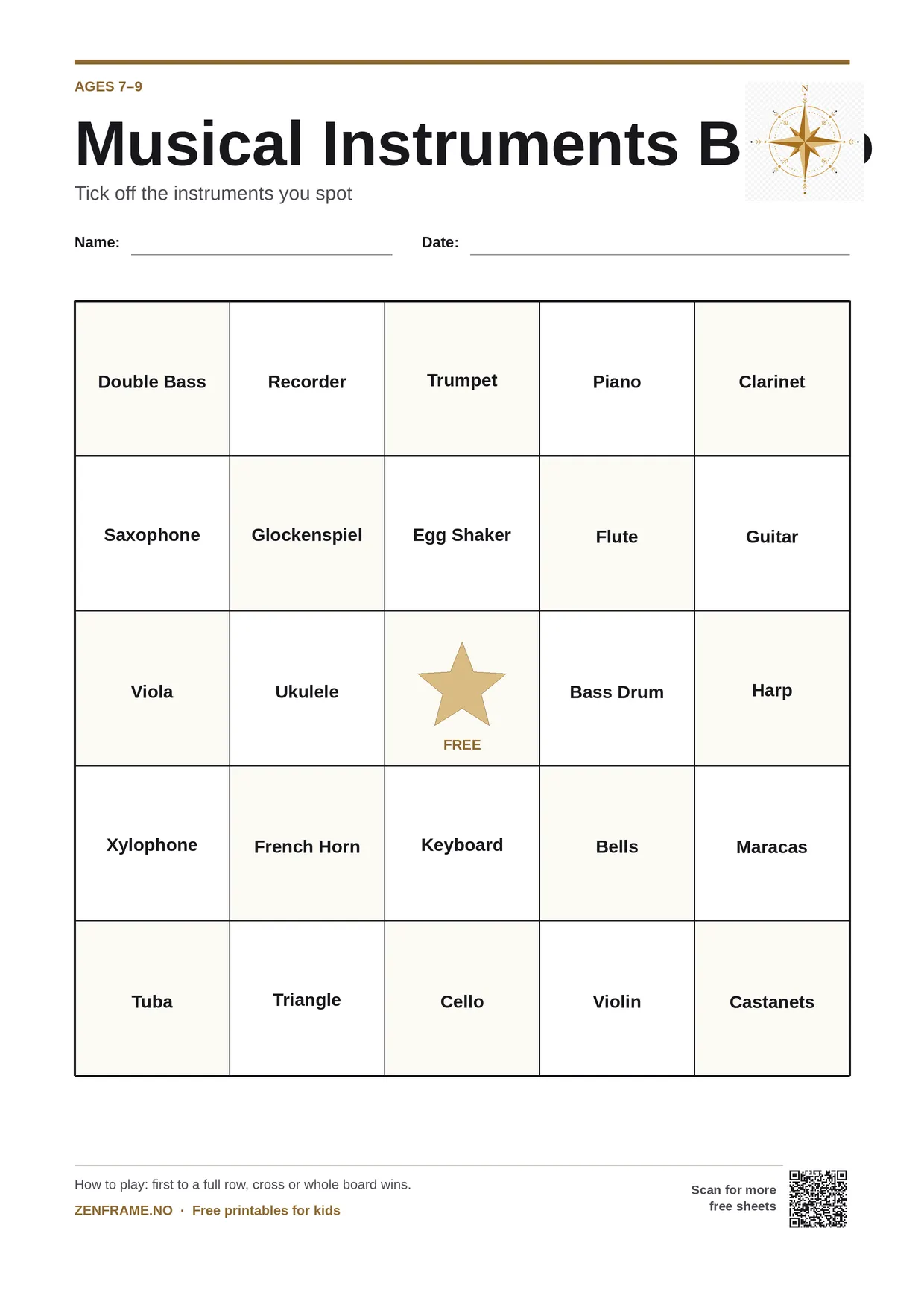
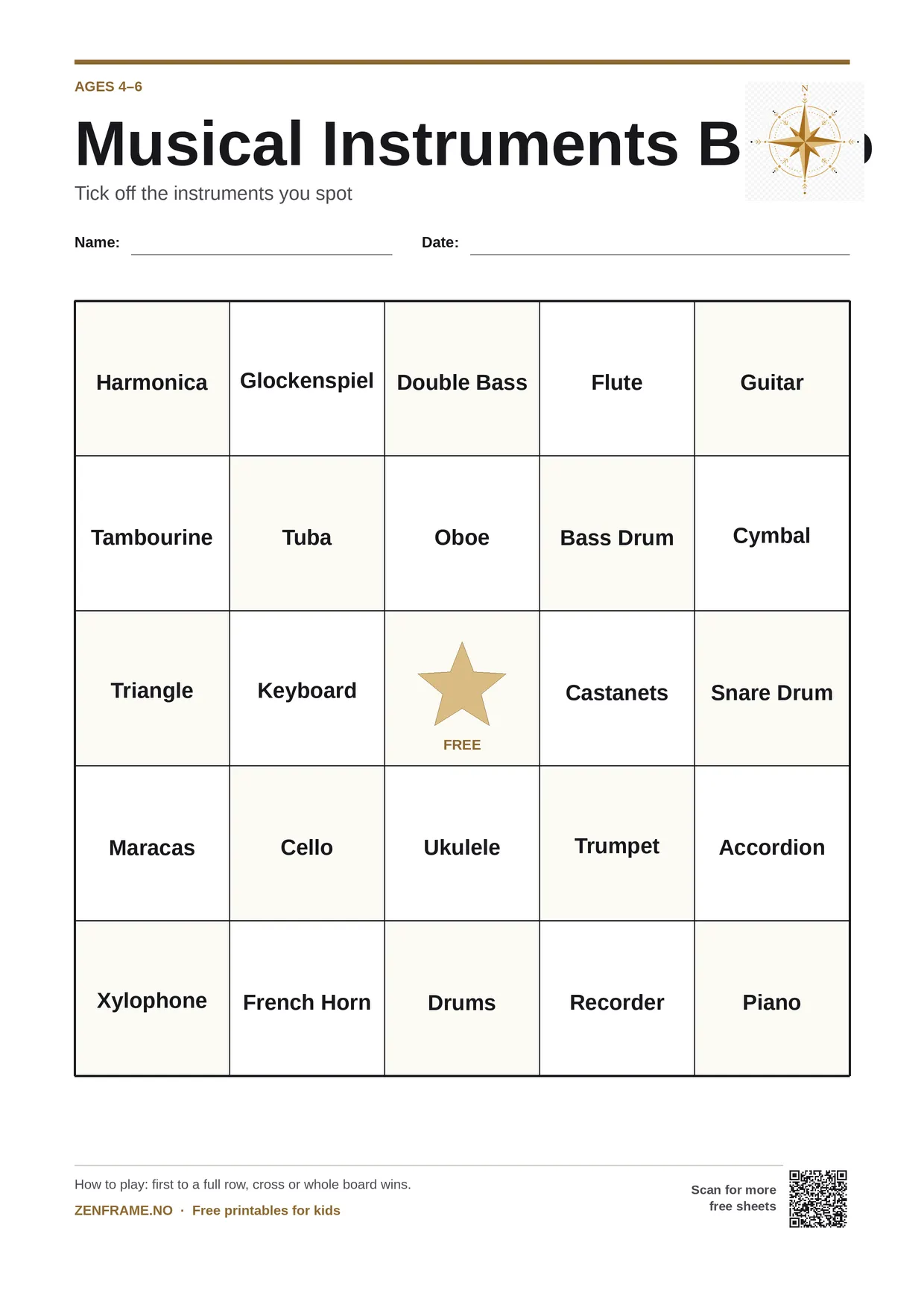
- A ready-to-print bingo card with seven core instruments
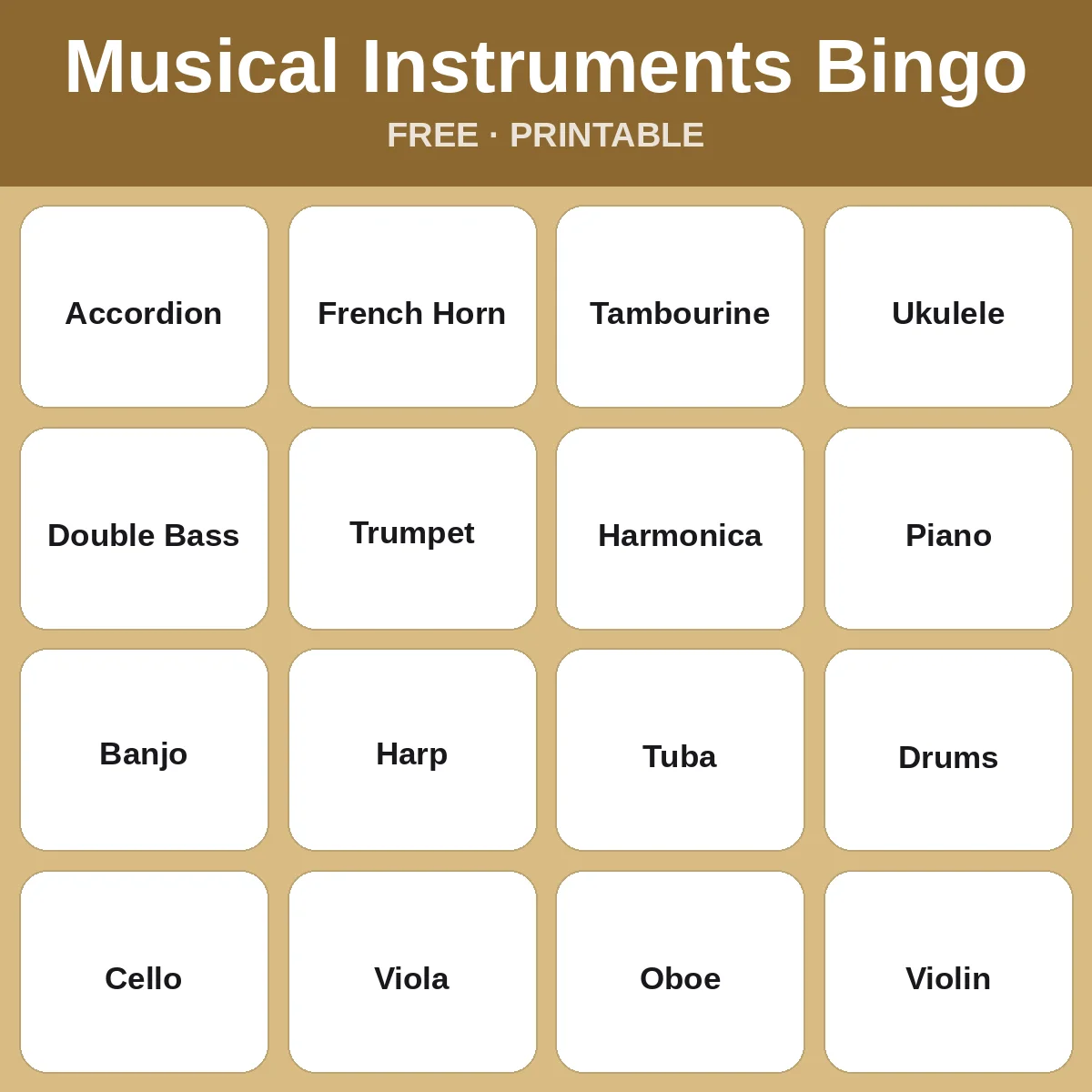
- A larger 32-word instrument bank for extra rounds
- Cut-out talking cards for naming and guessing games
- No shopping list — buttons, coins, or beans work as markers
How to use it
- Print the card. Print the bingo sheet on regular paper — no special stock needed, and it holds up fine to a few rounds of little hands.
- Cut out the talking cards. Cut along the lines to make individual instrument cards you can pull from a bowl or hat one at a time.
- Set up markers. Grab buttons, coins, or dried beans from a kitchen drawer — anything small works as a bingo marker.
- Play and rotate. Call out or draw a card, kids mark the matching instrument, and first to a full line — or full card — wins. Swap in new instruments from the word bank for the next round.
More versions of this sheet
Frequently asked questions
- What age is musical instruments bingo good for?
- It works well from about age 3 through early elementary school. Younger kids can match by picture alone, while older kids enjoy calling out instrument names or humming a sound clue for others to guess.
- Do I need real bingo chips to play?
- No — buttons, coins, dried beans, or even scraps of paper torn into squares all work fine as markers. The point is to keep this a zero-shopping activity you can start the moment it's printed.
- Can more than one child play the same card layout?
- Yes. Since the core seven instruments repeat across cards, print a few copies and let siblings or a small group play the same round side by side, calling instruments in turn.
- How do I keep it interesting after a few rounds?
- Swap instruments in from the larger 32-word bank instead of replaying the same seven every time. New instruments like accordion, banjo, or French horn keep repeat players guessing.
- Is this printable free to use?
- Yes, it's a free printable from Zenframe — print it as many times as you like for home, classroom, or car-ride use.