Activity Workshop · Printables
Valentine Bingo for Kids
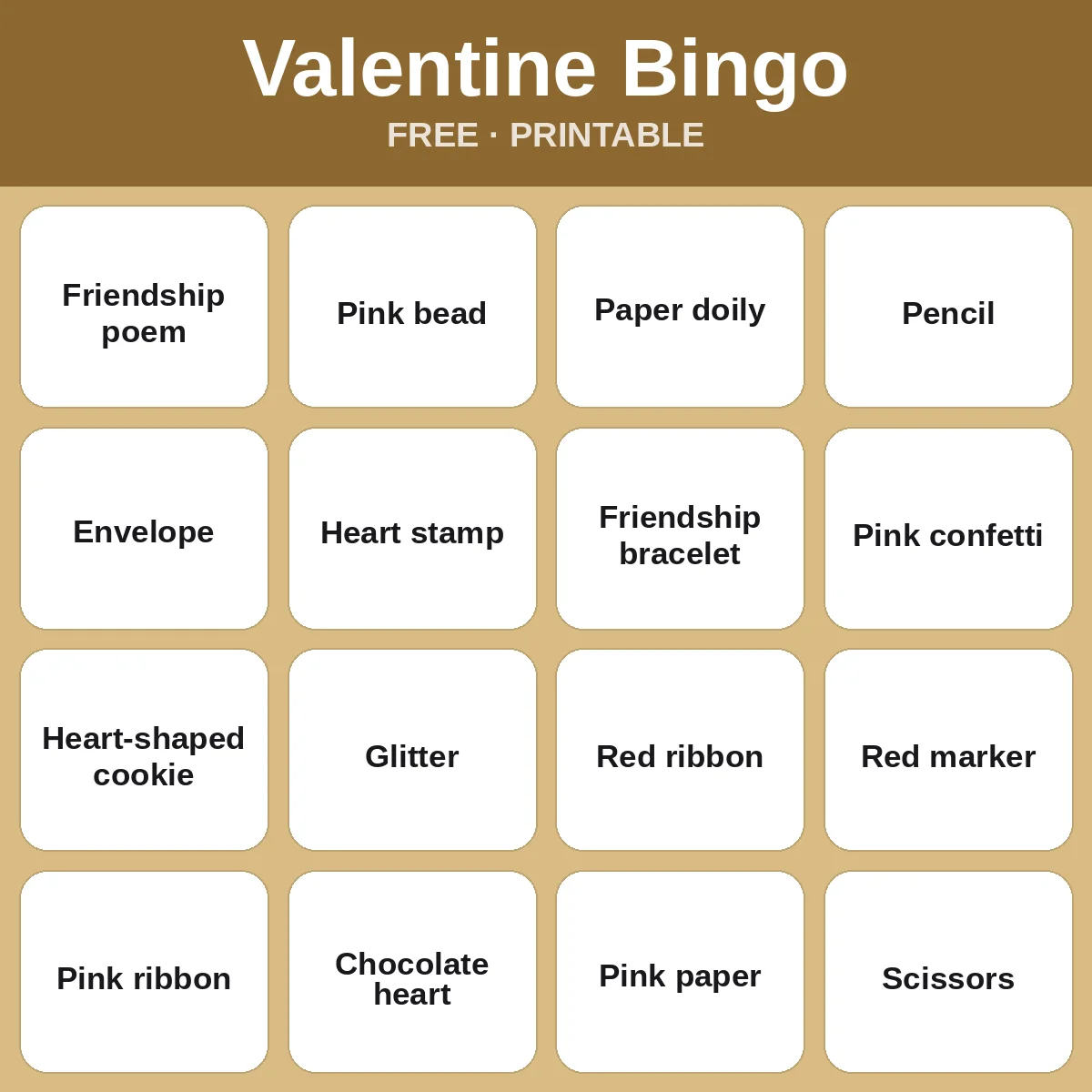
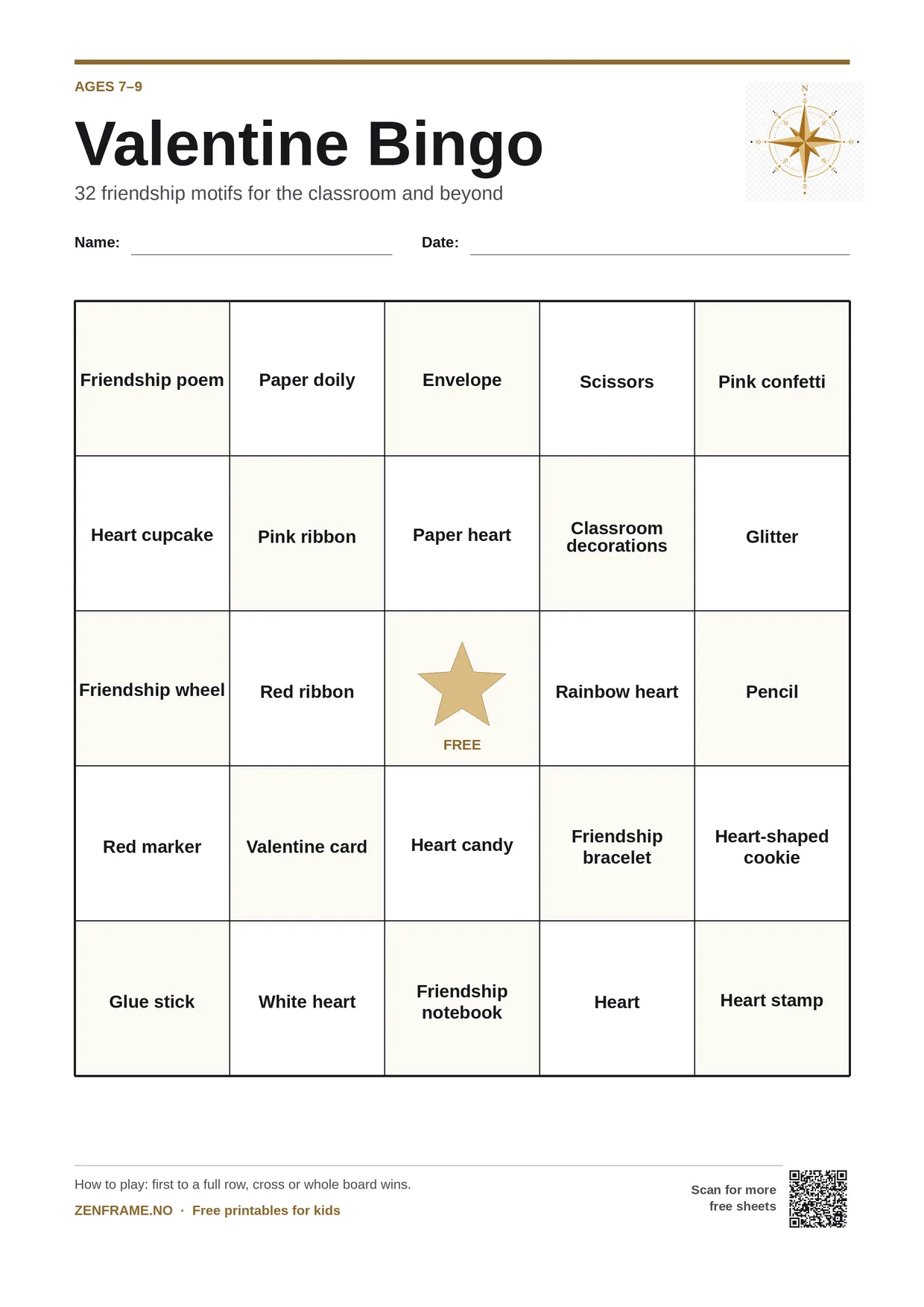
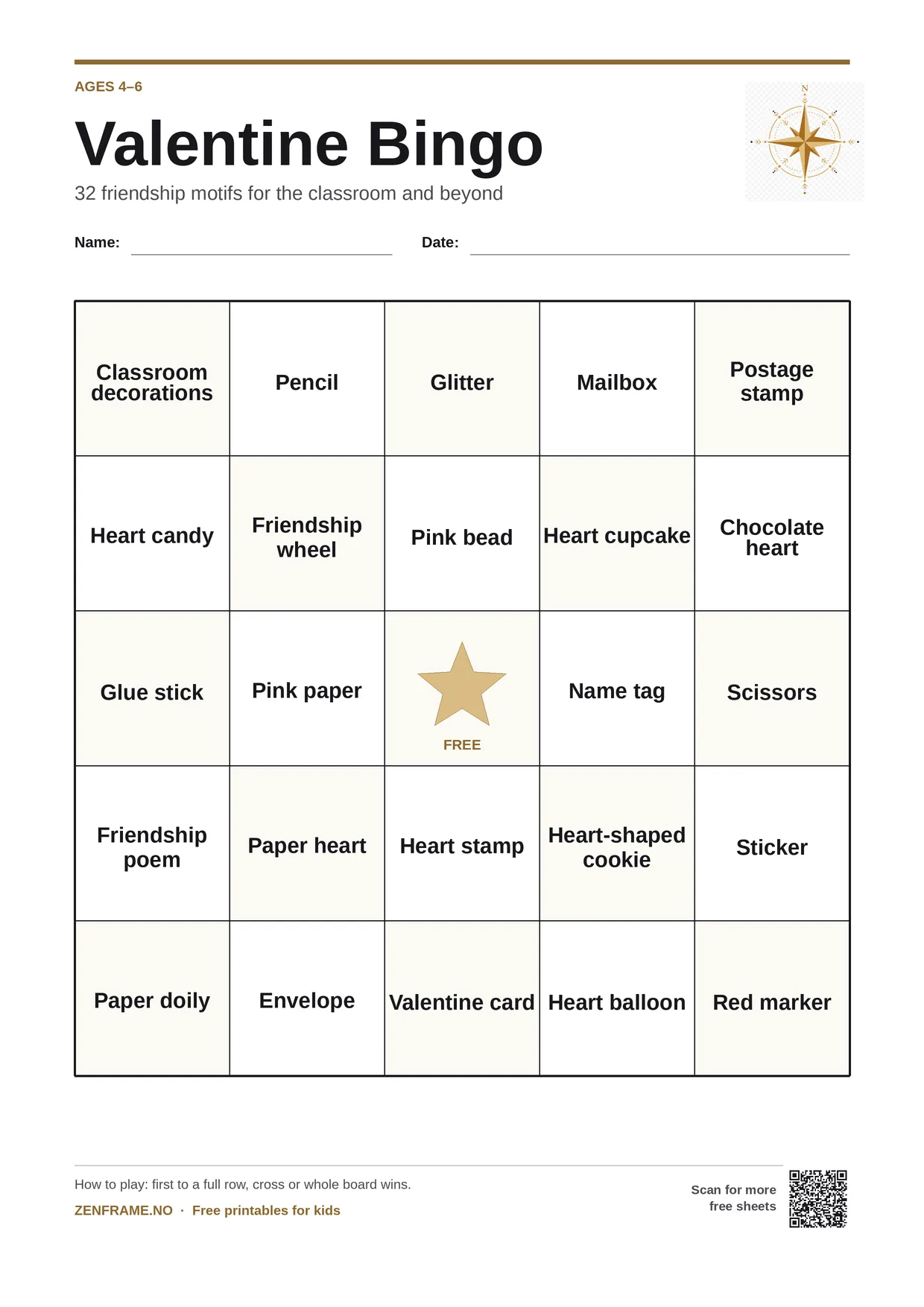
Valentine bingo is a free printable bingo game made for kids in preschool and elementary classrooms, with 32 motifs pulled from a warm, non-romantic Valentine's celebration: hearts, cards, glitter, and friendship symbols. The angle here is friendship, not crushes — every board is safe to hand out in any classroom or group without a single motif needing an explanation about romance. Print as many boards as you need, hand them out with something to mark squares, and let the rest of the class party take care of itself. The game needs no prep beyond printing, and works just as well as a quick five-minute break in the school day as it does as the centerpiece of a February classroom party.
Download free
Pick an age, download the A4 PDF with answers, and print. No sign-up.
Pick an age — download PDF

About this sheet
Classroom Valentine's Day parties run better when nobody has to sit out a theme built around crushes. Valentine bingo keeps the day about friendship and kindness instead, which is why teachers and parents keep coming back to it every February. Every motif on the board — hearts, cards, glitter, a friendship bracelet — belongs to the classroom party, not to anyone's private feelings.
The format works for a wide age range. Preschoolers can play with a teacher calling out motifs and pointing to pictures, while older elementary kids can run the game themselves once someone explains the rules once. Because the board only asks kids to recognize a picture, no reading is required, which keeps it inclusive for classrooms with mixed literacy levels.
Print one board per child, or double up boards for a shared game between pairs. A few extra boards on hand means you can restart the game more than once during a party without anyone playing the exact same board twice in a row.
This bingo pairs naturally with a short craft break or a class Valentine card exchange — call a round while cards are being handed out, or use it as the five minutes before recess when energy is high and structure helps.
What you get
- 32-motif Valentine bingo board, ready to print in seconds
- Friendship-themed icons — hearts, cards, and classroom Valentine staples, no romance angle
- Print-at-home PDF, no login or sign-up required
- Reusable for any group size — preschool, elementary, or after-school club
How to use it
- Print your boards. Download the PDF and print one board per child (or per pair, for younger groups). Regular printer paper works fine.
- Hand out markers. Give each child something to cover squares with — coins, buttons, or scrap paper work as well as bingo chips.
- Call the motifs. Call out motifs one at a time in any order. First to complete a row, column, or full board wins.
- Celebrate together. Keep a small stack of stickers or candy hearts on hand for winners, and reset the boards for another round.
More versions of this sheet
Frequently asked questions
- Is this Valentine bingo appropriate for a classroom with kids from different backgrounds?
- Yes — the game deliberately avoids romantic themes and sticks to hearts, cards, and friendship symbols that are common across any Valentine's Day classroom celebration, so no child needs a special explanation or opt-out.
- What age group is this printable for?
- It works well from preschool through about third grade. Younger kids need an adult to call out motifs and point to matching pictures, while older kids can read and run a round on their own.
- Do I need to buy anything else to play?
- No — you only need something to mark squares with, such as coins, buttons, small candies, or torn scrap paper. Everything else is on the printed board itself.
- How many boards should I print for a class party?
- Print one board per child, plus a few spares in case a board gets damaged or you want to run a second round with fresh combinations partway through the party.
- Can I use this outside of school, like at a family Valentine's gathering?
- Absolutely — the friendship theme works just as well at home with cousins or neighborhood kids as it does in a classroom, and it needs no romantic framing to make sense for a mixed-age family group.